How to come up with a good shop name

“I'll call the company Apple if you don't come up with something better by 5 o'clock!” – Steve Jobs, the legendary founder of Apple and author of equally legendary motivational quotes, once said.
And he did! And the name turned out to be spot on, giving the world one of the most popular and successful companies of our time. Luck, pure chance or a planned marketing move?
What should you focus on when choosing a name for your shop, restaurant, any retail outlet or trademark? We have put together a short list of tips to help you come up with a name that is not just striking but effective.
What naming is and why it matters so much
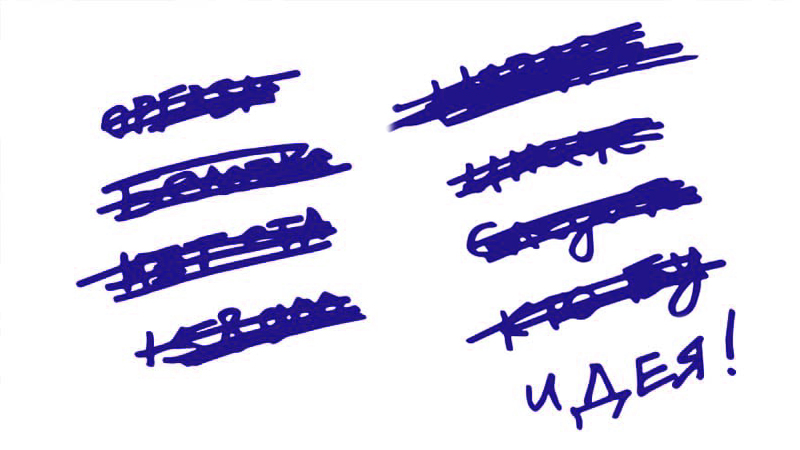
Simply because nothing should go nameless! Practically everything in this world needs a name. In most cases a faceless object is an object nobody is interested in, which is completely unacceptable, especially in business.
Since foreign loanwords are very fashionable these days, the native term for name creation has fallen out of use. Marketing, branding and the other “-ings” have now been joined by naming – a thorough process of developing unique names for companies, products and services.
The name of a company or shop is the first thing customers come across. So choosing a good one is no easy task for any entrepreneur.
But! If you make the effort and use all your analytical and creative brainpower, you can turn this problem into another productive step on the road to success.
Of course, you can turn to professionals for help. Or you can try your hand as a name maker yourself, since nobody knows your company or shop better than you do. Experience shows that the most successful names are often thought up by the owners themselves.
A few naming statistics:
- about 90 % of consumers choose a product or company whose name inspires trust and pleasant associations;
- around 77 % of companies with badly chosen names go down the drain of competition and fail within 2 years on the market.
A well-chosen, unique name is the starting point for building an image, the point that sets the tone for all further advertising aimed at popularising and promoting the business.
So we can conclude that naming is needed to:
- enter the market with dignity, building and maintaining a positive company image;
- make yourself known to potential customers and spark their interest;
- stand out from your competitors and outdo them.
Besides financial investment, a business needs endless patience, perseverance and drive – and the ability to set priorities, and choosing a name is one of the first. The art of naming is there to help you identify and position yourself properly.
Key requirements for a shop name and rules for choosing one
1. Brevity is the soul of wit!
The name should be short and memorable, as if it sticks in the mind. Never use long-winded 3-part constructions that are hard not only to remember but also to read, e.g. “Beautiful things for your cosy home and your garden”. The ideal length is 1-4 syllables. Anything longer, people automatically start shortening: “Full Basket”, for example, becomes just “Basket”.
2. Appeal to positive emotions
On a subconscious level the name should evoke positive associations: be inspiring, cheerful, give confidence or hope, be pleasant – for example, the children's entertainment centre “Ulybaika” (“Smiley”) or the veterinary centre “LapUshka” (a pun on “paw” and “sweetie”). Especially amid the stresses of modern life, when people lack positivity, names like these really catch the eye and spark interest. It also helps if the name sounds nice when spoken.
Or, for example, the jewellery shop name “Lombard Dzhini” (“Pawnshop Gini”), built on wordplay, is associated with the expensive Lamborghini brand and therefore creates a positive image.
3. Uniqueness is everything!
Just imagine how many kiosks are called “Bread” and how many shops are called “Groceries”. Too many to count. Despite the huge demand for these goods, an interesting name would give a particular shop a big advantage and make it stand out from the rest, e.g. “Little Loaf”, “Popping Out for Bread”, etc. So avoid names that echo your competitors' names – not to mention names that duplicate existing ones, to avoid plagiarism and intellectual property lawsuits. You can check whether your chosen name is unique online. And if you plan to launch a website, the domain name must be available and open to as few interpretations as possible.
4. Neutrality and international appeal
If you don't want your chosen name to turn up in an embarrassing context somewhere, or you expect foreigners to deal with your company, take into account all the nuances of translation and transliteration. You never know how the name will sound in another language or what it will mean (perhaps something negative or even obscene).
5. Everything has to fit
The name should reflect the subject and idea of the business in any field and fully match the overall positioning concept. Sometimes there are completely absurd choices, such as a men's clothing shop called “Ruslan and Lyudmila”. Ruslan, fair enough. But what has Lyudmila got to do with it? Or if you call a shop selling uniforms for security and law enforcement “Stilyaga” (“Dandy”), it will simply sound ridiculous, whereas “Outpost” or “Aegis” is a different matter altogether.
6. Focus on your target audience
“Everything for Newlyweds”, “Student Café” – names like these draw in exactly the category of customers you are interested in. For example, it is immediately clear that “MaNyuNyam” dumplings are meant for small children. So it is very important to consider the gender preferences and values of potential customers, as well as their lifestyle.
How to choose a name for your shop: step by step
Essentially, a commercial name works on two independent levels: meaning and impression. Your task is to combine them into a harmonious pair. Naturally, this will take more than a day, but the result will be worth it.
- Analyse your company's field of activity and write a short description of its services and goods, values and ideas. What emotions do they evoke, what problems do they solve, what is special about them that you could build on?
- Create a portrait of your potential customer based on their tastes and preferences. Put yourself in their shoes: what associations would the goods or services you offer evoke for you?
- Collect your competitors' names so that you not only avoid repeating them but also avoid looking similar.
- Organise a list of possible names (perhaps using popular naming techniques), and ask friends and acquaintances what they think. Ask them to come up with their own ideas too, hold a discussion and check: is the name memorable, how does it sound?
- By a process of elimination you will finally arrive at the best option. If you want to register a trademark, check that the chosen name is unique using online resources.
Use your imagination often: picture how the name will go with a slogan (which would be good to come up with later), how it will look on a business card, logo or sign, how it will sound in advertising, and so on. As Steve Jobs said: “Work smart, not 12 hours a day.” Only then will you achieve excellent results.
How to come up with a name: the most effective methods
1. Please introduce yourself! What's your name?
Since genius lies in simplicity, perhaps your own first name or surname will be the key to naming. Using anthroponyms (people's full names or pseudonyms) is one of the most popular methods and has been at the top for decades. Car manufacturers are a prime example. Statistics show that a third of the names of the 100 most valuable and successful brands are the surnames and first names of their founders, e.g. Toyota, Ford, Honda, Philips, Mercedes, Procter&Gamble, Gillette. Not to mention the fashion industry: Prada, Gucci, Louis Vuitton, etc. In this case the founder's direct identification and reputation come to the fore, which automatically inspires trust and raises the company's status.
2. Follow Adidas's example
That is, combine words to create a new one. This is one of the most popular naming tricks, and the name of the sportswear brand Adidas is clear proof: it is made up of 2 parts of the founder's first name and surname – Adolf Dassler. Shortening, extracting or cutting out certain syllables from words, phrases, first names or surnames also falls under this heading (as with the confectionery company Roshen).
3. Rhyme or find a rhythm
This technique goes by the fancy poetic term “alliteration”, meaning the repetition of the same sounds in a text to make it more expressive. Alliteration is what makes poems and songs memorable. So if your chosen name has a rhyme (e.g. “Bukety ot Svety” – “Bouquets from Sveta”, which rhymes in Russian) and a certain rhythm, like Coca-Cola or Chupa-Chups, it will be much easier to remember.
4. Shorten and use abbreviations
This method comes to the rescue when a long name can't be avoided. That is what IKEA, BMW and NASA (National Aeronautics and Space Administration) did, or the well-known publishing house MIF (an abbreviation of the owners' surnames – Mann, Ivanov, Ferber).
5. Try the method of analogies and associations
Analyse everything your goods or services will be associated with, as the owners of the Jaguar car brand did, using the name to emphasise all the power, beauty and speed of their cars. Or like the Bounty chocolate bar, which promises a “taste of paradise” because it is named after a beautiful archipelago in the Pacific Ocean.
6. Turn to nature
Or rather to geography, botany, astronomy and any other science that can throw you a good, beautiful word. This naming method is also among the most popular, as it lets you make a more emotional connection with the customer by bringing a specific image to the fore.
These can be names of plants and animals (zoonyms), rivers, mountains, cities and any geographical features. A shop selling hiking and climbing gear might be called “Mont Blanc”, and one selling Indian goods and incense “Agra” (the city where the famous Taj Mahal stands).
7. Use foreign words
Even the most ordinary, mundane words sound more beautiful, intriguing and melodious in a foreign language. For example, Samsung's mobile phone range once included a “La Fleur” series, which is French for “flower”. You must admit that this name sounds much better and more striking than the familiar English “flower”.
8. Refer to books
Or their authors. Cult fairy tales, all kinds of literary works and their characters can all be used. What a great name for a cake shop “TORTilla” would be (after the wise turtle Tortilla from the Russian Pinocchio tale, with “tort” meaning “cake”)!
The same applies to works of art and architecture: a shop selling expensive furniture could confidently be called “Versailles” – short, euphonious and beautiful. And a shop selling art supplies – “Raphael”.
We could go on giving examples of good and bad names, because naming has its 100% misses too. Clearly, a grocery shop is better called “Yummy” than “Glutton”, and a flower shop “Rosetta” rather than “Cactus”. Although everything is relative and individual. But your wish to say no to worn-out phrases and banality shouldn't lead you to absurdity.
We strongly advise against combining two names on one sign for a single shop. Yes, lack of space has its own demands, but combining the sweet shop “Sweet Tooth” with the funeral supplies shop “Last Journey” is extremely unwise.
In conclusion
It is important to remember that choosing a name has a creative side that matters to the end customer (how it sounds, how memorable it is, what associations it evokes) and a marketing side that matters to you (whether it helps you compete and promote yourself on the market).
One thing remains clear: good, apt naming is a major leap forward. Choosing a name carefully is your responsibility, above all to your own company, and one of the keys to its future success.
According to the “7-second” rule, that is how long it takes to form a first impression of a person. The same is roughly true of a shop. And that impression starts with the name, which should be original and catchy.
The Tashuta advertising agency offers you shop signs, illuminated letters and other outdoor advertising on favourable terms, to present that name to your customers brightly and with style.







-
![About us]() About us
About us
-
![Contacts]() Contacts
Contacts
-
![Payment]() Payment
Payment
-
![DELIVERY]() DELIVERY
DELIVERY
-
![Gallery]() Gallery
Gallery
-
![For designers]() For designers
For designers
-
![Print-ready artwork requirements]() Print-ready artwork requirements
Print-ready artwork requirements
-
![Aluminium composite colour range]() Aluminium composite colour range
Aluminium composite colour range
-
![Chipboard colour palette in stock]() Chipboard colour palette in stock
Chipboard colour palette in stock
-
![Artwork approval rules]() Artwork approval rules
Artwork approval rules
-
![LED neon colours]() LED neon colours
LED neon colours
-
![Artwork design]() Artwork design
Artwork design
-
![RAL colour chart]() RAL colour chart
RAL colour chart
-
![Pantone colour chart]() Pantone colour chart
Pantone colour chart
-
![Series 641 – economy]() Series 641 – economy
Series 641 – economy
-
![Altuglas coloured acrylic palette]() Altuglas coloured acrylic palette
Altuglas coloured acrylic palette
-
![Two-layer plastic colour palette]() Two-layer plastic colour palette
Two-layer plastic colour palette
-
![Useful articles about advertising]() Useful articles about advertising
Useful articles about advertising
-
 About us
  Company documents
  Contacts
  Payment
  DELIVERY
  Gallery
  For designers
  Print-ready artwork requirements
  Aluminium composite colour range
  Chipboard colour palette in stock
  Artwork approval rules
  LED neon colours
  Artwork design
  RAL colour chart
  Pantone colour chart
  Series 641 – economy
  Altuglas coloured acrylic palette
  Two-layer plastic colour palette
  Useful articles about advertising