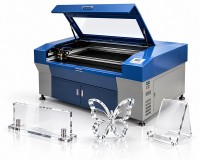
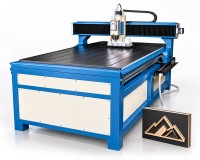
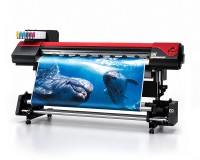


Today it is hard to imagine a big city without bright, colourful billboards, building wraps, city lights and other large-size printed products. Large-format printing (Kyiv, Odesa, Chernihiv) is what makes producing them efficiently possible.
Large-format printing is printing of the highest quality with maximum image sharpness
It can be used on a wide range of roll media, including photo paper, Oracal self-adhesive film, banner fabric and artist's canvas.
RVK Tashuta has specialised in this service successfully for many years, thanks to its own modern large-format printers with roll widths from 1 to 3.2 metres and high print quality – 720 and 1440 dpi.
Specialised inks with a huge colour gamut of millions of shades and high-speed printers with automatic control at every stage of printing ensure absolutely accurate colour reproduction and identical copies across the whole run, to the highest standards.
For extra protection of the finished product against any environmental effects, we apply lamination – a process of covering the image with a special clear protective layer.
You can order lamination of any printed product from us.
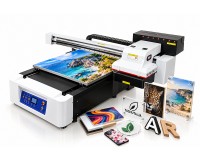
Large-format UV printing is a modern method of applying an image with inks that are cured on the surface of the material by ultraviolet light. It is suitable for both outdoor and indoor advertising and gives rich, lasting colours; it is durable and water-resistant. It is used for printing on rigid sheet materials (such as PVC).
Fitting eyelets is an essential step in banner production, and we offer this service too. We also offer banner welding (joining and hemming), for which special pockets and seams are used. Eyelets make banner fixing durable and reliable, protect the fabric from tearing at the fixing points and make installation simple.
With the printing market overflowing with offers, we focus on solving our clients' problems: rather than talking at length about the high quality of our services, we prefer to deliver genuinely good products efficiently and on favourable terms.
For us, what matters most is that large-format printing meets all your requirements, and only then shows off design skill. For that, the artwork you supply must meet all the technical requirements, which you can find in the Print-ready artwork requirements section

 Full-colour images are produced on printers with widths from 1.2 m to 8 m, at print resolutions from 150 dpi to 1800 dpi, using specialised inks. Printers optimised for high-speed, high-quality printing deliver true colours (up to 18 million shades) and fully identical copies across the run. The result is accurate colour reproduction that meets modern large-format printing standards. For extra protection of the inks against the environment, the image is covered with a special protective layer (laminate).
Modern printers are usually equipped with automatic monitoring systems for media (take-up units for finished prints – handy
when printing long images and/or when the prints are to be laminated afterwards), ink consumption, automated print head alignment systems (automatic colour correction), automatic head cleaning during printing, media preheating, and high-temperature dynamic drying of printed images (if the plotter has no drying system, finished prints cannot be wound ![Large-format printing]() onto a take-up reel (or simply into a roll). This means the operator has to stand by the plotter, make sure the print does not touch the floor, cut it off at the end of printing (all modern plotters, even inexpensive ones, have an automatic cutter for this) and lay it out (or hang it up) in a dedicated drying area. Drying is especially important on fast plotters and when printing on photo paper or film).
onto a take-up reel (or simply into a roll). This means the operator has to stand by the plotter, make sure the print does not touch the floor, cut it off at the end of printing (all modern plotters, even inexpensive ones, have an automatic cutter for this) and lay it out (or hang it up) in a dedicated drying area. Drying is especially important on fast plotters and when printing on photo paper or film).![Large-format printing]()
Large-format printers usually have easy-to-read LCD displays and convenient navigation controls.
One of the key components of a modern printing plotter is the ink supply system. It lowers the cost of printing and increases productivity by feeding ink from large reservoirs. As a result, the plotter stops for ink refills far less often than with ordinary cartridges. When Encad first introduced its NovaJet PRO 36 plotter with ink fed from 500 ml bottles in 1995, it caused a sensation among advertisers – the plotter could print for a whole day without stopping! Within 2-3 years, other manufacturers had introduced similar systems.
Two main ink supply systems are used today:
 onto a take-up reel (or simply into a roll). This means the operator has to stand by the plotter, make sure the print does not touch the floor, cut it off at the end of printing (all modern plotters, even inexpensive ones, have an automatic cutter for this) and lay it out (or hang it up) in a dedicated drying area. Drying is especially important on fast plotters and when printing on photo paper or film).
- Continuous (Encad, ColorSpan, Mutoh, Roland). In a continuous system, ink is fed to the inkjet heads through tubes connected to the ink reservoirs. The ink flows according to the universal physical laws of communicating vessels and capillary action.
![Large-format printing]()
- Batch (HP). In a batch system, the inkjet head pauses printing and moves to a refill station, where a special pump tops up the head's buffer with the next portion of ink from a special cartridge; the head then prints on until the next refill. Both systems have proved quite reliable.

 There is a certain nuance in the design of the ink containers. One technology uses special replaceable cartridges, thereby trying to stop customers from using other manufacturers' inks. The other simply has you pour ink into reservoirs built into the plotter. This means you can even buy ink in 10-litre canisters (some companies offer this), which, it must be said, is sometimes quite convenient and inexpensive.
A few words about colour: Originally, plotters used the standard printing CMYK colour set (cyan, magenta, yellow and black). For a long time, colour reproduction improved through better inks and media, better colour calibration and rasterisation. Then 6-colour models came into fashion from the printing industry. ColorSpan has gone furthest so far, introducing the 12-colour DisplayMaker XII model in 1999. It is important to understand that increasing the number of inkjet heads (in this case to 12) inevitably calls for technically complex solutions for aligning the heads to prevent banding. In DisplayMaker plotters this is solved with an automatic “eye” (a built-in scanner) that detects the relative position of the heads and issues commands to align them.
 Roland and Mutoh are in a better position, as they use Epson piezo heads with 3 channels each. So to build a 6-colour system they only need to align two heads. Piezo heads are designed for long-term use, so the way they are mounted eliminates the need for daily calibration.
 After CMYK, the most common colour spaces today are the 6-colour CMYK LcLm (CMYK + light cyan and light magenta) and CMYK OrGr (CMYK + orange and green). The 6-colour Mutoh and Roland plotters can work in both 6-colour spaces as well as in ordinary CMYK.
 So which plotter should you choose – a standard 4-colour one or a multicolour one? First and foremost, that depends on the tasks you want to tackle. In the end, you will have to assess print samples from different plotters yourself before deciding.
Since all printer models use identical printing technologies (with a few very rare exceptions), the fundamental technical differences between printers are not as significant as they may seem at first glance.
A word about resolution: There is real resolution and addressable resolution. Real resolution is what the inkjet head itself delivers; addressable resolution is a higher dot density achieved through multiple passes of the heads. Always go by real resolution, as addressable resolution is very often misleading. When you see a resolution of 720×1440 dpi in a Roland or Mutoh brochure, or 1800 dpi for ColorSpan, the figures 1440 and 1800 dpi should be understood as addressable (“enhanced”) resolution. In “enhanced” resolution mode, the plotter drives the inkjet heads so as to increase dot density 2-3 times, and
  print speed drops accordingly, also by 2-3 times. Does this affect quality? Yes: in some cases it eliminates banding and gives smoother halftone transitions, but it cannot produce finer image detail – the basic dot size stays the same. In the experience of most full-colour print producers, “enhanced” resolution mode is hardly ever used in large-format printing; it is mainly a marketing ploy by the manufacturer.
Print speed: This is where the greatest confusion lies, as there are no common criteria for comparing plotter speeds. Almost any plotter has 5-8 print modes: unidirectional or bidirectional printing, in 1, 2, 3, 4, 6 or 8 passes, at “enhanced” or “reduced” resolution. The fewer passes the inkjet head makes, the faster the printing, but the lower the quality. You could, of course, compare maximum speeds – bidirectional printing in
  a single pass (usually called “draft” mode). But nobody prints real orders in that mode. The “normal” print mode varies between plotters in the number of passes (3-4), but its point is that it reproduces graphically complex images (with halftone transitions, large solid fills and so on) properly on photo paper. In other words, this is the real speed at which orders are printed.
There are quite a lot of manufacturers of plotters with a print width of less than 3 m, and they make several dozen different models. Accordingly, the installed base of such devices is large – it runs into hundreds of thousands. The situation is quite different in “high society”: you could count all the manufacturers of super-wide-format models – mega-printers (from 3.2 m to 8 m) – on the fingers of both hands, and the total number of models does not exceed twenty.
In 1992, a division of NUR (which later split off and became the basis of MDP) developed the OutBoard printer, with exclusive distribution rights granted to Scitex from 1993. Scitex has since acquired MDP (which will become part of its Idanit division), so MDP's latest development, the Matan Grand Jet, will also be sold under the Scitex brand. As a result, Scitex now owns the two fastest large-format printers in their respective classes – the Idanit 162Ad and the Matan Grand Jet. The development of large-format printers is inseparable from the development of printing technologies. Modern inkjet printing technologies have a lot in common. The very name “inkjet” tells you that liquid ink is used and that the image is created by
  applying individual coloured dots to the paper. Almost all inkjet printers use the Drop on Demand algorithm. This means that to place a drop (dot), a special signal is sent indicating which of the printer's nozzles should fire the drop onto the paper. This is repeated many times, and the image is built up from the individual dots placed on the paper.
So almost all inkjet printers use Drop on Demand technology. But this is where the differences begin: how do you make the print head eject a drop?
There are two different technologies for firing an ink drop:
- Thermal printing, in which the drop is ejected when a special plate is heated.
- Piezoelectric technology, in which the drop is ejected by a plate that flexes under an electric current.
 In electrostatic printers the image is formed by an electrostatic charge on an intermediate carrier, onto which the CMYK colourants are applied in turn. The image is then transferred to the print material and fixed. Such devices offer fairly high resolution and high productivity, but also relatively high running costs.
Durst, Gretag and others use laser and LED technologies in their large-format models. These printers are very expensive and cannot print on thick materials or materials that cannot withstand heat, although they are quite productive and their consumables are inexpensive. That is why most manufacturers of super-wide-format printers have chosen various inkjet technologies for their devices. NUR printers use continuous inkjet technology with electrical deflection of drops. In SignTech's PowerJet series, ink drops were ejected on command and then directed onto the print material by an air stream.
 1998, however, can be called the year of piezo inkjet printing, and this technology became dominant in printers of almost every format, from home printers to super-wide-format “monsters”. It delivers very high print quality and higher productivity. Quality here means higher resolution, a wider potential range of inks than thermal inkjet, and the ability to control drop size. Piezoelectric heads are far more reliable and last longer (1-3 years). They do cost more (up to 300 USD), and replacing them is more complicated (it involves dismantling the plotter), but that hardly matters now, given the excellent print quality you get in the end. Experts predict that the future of large-format printing lies with piezo printing – and that future is already embodied in the latest super-wide-format models: Vutek UltraVu, Matan Grand Jet and Signtech Salsa.
  There is no definitive answer to the question “Which printing system is better?” Only a general recommendation can be given: if you need to handle large volumes of work, choose thermal plotters; if top photorealistic quality matters most to you, choose piezo plotters. And if you need both? The usual answer is that on a modern inkjet plotter the most important factor for high productivity and quality is the operator's skill. You can use the best plotter there is, but if the wrong consumables were chosen, colour calibration was not carried out or the print was not dried enough, the finished job ends up rejected.
Ultimately, looking at how thermal and piezoelectric inkjet technologies have developed, each makes a significant leap forward roughly every six months, but the lead never lasts long, as competitors soon bring out new developments. Manufacturers' adoption of new technologies has given fresh impetus to the industry as a whole and significantly lowered the price of printing equipment, making it more accessible to interested buyers: advertising production companies, print shops, printing houses and sole traders working in advertising.
At the same time, organising proper service and technical support, and timely supply of print media, inks, consumables and spare parts, are coming to the fore. These new tasks are being taken on both by equipment sellers and by equipment owners themselves as they operate it. The experience gained becomes the starting point for improving the devices, making the technology simpler and even more convenient to use.
Large-format printing offers major advertising advantages. Its main applications:

- Posters for billboard structures (billboards – 3×6 m, city light format (1.2×1.8 m) and other standard network structure formats);
- Double-sided printing for backlit applications;
- Decoration for presentations, exhibitions and promotional events, and interiors of clubs, restaurants, bars, shops and offices, stadiums and stations;
- POS materials;
- Signs and information spaces;
- Branding for public transport and bus stops;
- Floor graphics.
Large-format printing can be done on a very wide range of materials:
- Paper (matt or gloss, smooth or textured, including watercolour-style paper);
- Self-adhesive films;
- Various types of banner fabric and paper;
- Translucent fabrics;
- Vinyl construction mesh;
- Canvas;
- Silk;
- Polyester film;
- One-way vision window film (mesh for glass tinting with one-way transparency).



-
![About us]() About us
About us
-
![Contacts]() Contacts
Contacts
-
![Payment]() Payment
Payment
-
![DELIVERY]() DELIVERY
DELIVERY
-
![Gallery]() Gallery
Gallery
-
![For designers]() For designers
For designers
-
![Print-ready artwork requirements]() Print-ready artwork requirements
Print-ready artwork requirements
-
![Aluminium composite colour range]() Aluminium composite colour range
Aluminium composite colour range
-
![Chipboard colour palette in stock]() Chipboard colour palette in stock
Chipboard colour palette in stock
-
![Artwork approval rules]() Artwork approval rules
Artwork approval rules
-
![LED neon colours]() LED neon colours
LED neon colours
-
![Artwork design]() Artwork design
Artwork design
-
![RAL colour chart]() RAL colour chart
RAL colour chart
-
![Pantone colour chart]() Pantone colour chart
Pantone colour chart
-
![Series 641 – economy]() Series 641 – economy
Series 641 – economy
-
![Altuglas coloured acrylic palette]() Altuglas coloured acrylic palette
Altuglas coloured acrylic palette
-
![Two-layer plastic colour palette]() Two-layer plastic colour palette
Two-layer plastic colour palette
-
![Useful articles about advertising]() Useful articles about advertising
Useful articles about advertising
-
 About us
  Company documents
  Contacts
  Payment
  DELIVERY
  Gallery
  For designers
  Print-ready artwork requirements
  Aluminium composite colour range
  Chipboard colour palette in stock
  Artwork approval rules
  LED neon colours
  Artwork design
  RAL colour chart
  Pantone colour chart
  Series 641 – economy
  Altuglas coloured acrylic palette
  Two-layer plastic colour palette
  Useful articles about advertising