
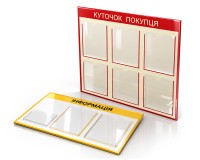
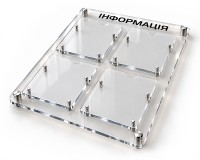
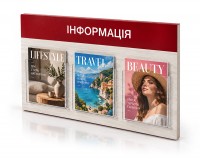
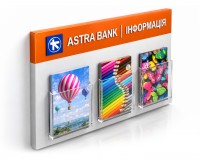
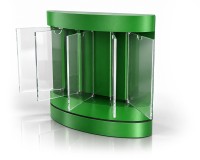
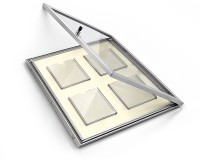
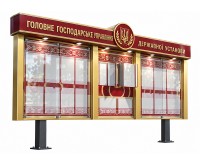


A lockable display case is a case for documents, notices or schedules that locks with a key. Only the keyholder can change the contents, so these cases are hung where lots of outsiders pass by every day: lobbies, company checkpoints, entrance halls of schools and colleges. The range falls into four design groups that differ in the backing, door material and profile depth – and that determines which case suits a particular location.
| Sizes: | from 420x600 to 1000x1500 mm, 7-8 options in most series |
| Backing: | 3 mm PVC in an aluminium profile – 5 series; laminated chipboard – 4 series |
| Doors: | 2-3 mm clear acrylic – 7 series; 3 mm real glass – 2 series |
| Lock: | included with every series |
| Backing finish of your choice: | printed, magnetic or cork – 7 of the 9 series |
What the different models are made of
All nine series lock with a key; beyond that they differ in design.
- PVC backing behind clear acrylic – a lightweight design; the door opens fully and gives immediate access to the whole backing.
- PVC backing behind 3 mm real glass – where a stiffer front panel matters.
- Laminated chipboard cabinet with acrylic doors and a deep profile – there is extra depth behind the glass (more on this below).
- Laminated chipboard cabinet for a single A2 sheet – holds one large document or drawing rather than a set of small notices.
Chipboard cabinets come in a separate range of chipboard decors – choose the cabinet colour from it.
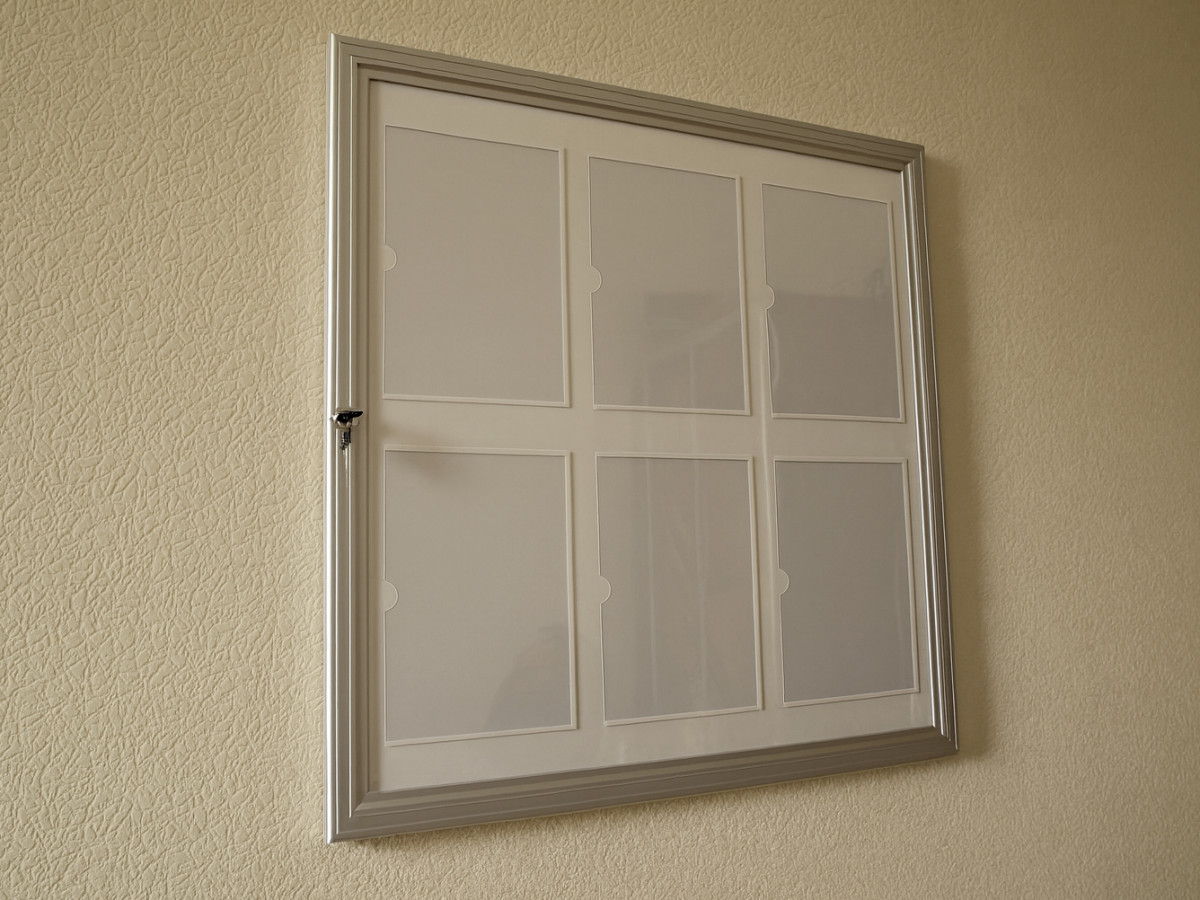

Hinged or sliding doors
Some models are closed by a single door that opens fully, like a cupboard door, giving instant access to the whole backing. Other models have sliding doors: they slide sideways along the profile instead of swinging out, so you do not need clear space in front of the case for an open door. The choice is a matter not of looks but of location: in a narrow corridor or tight against a corner a sliding design is better; on an open wall either will do.
Which backing finish to choose
In most series the backing behind the glass or acrylic gets one of three finishes, and your choice determines how the contents are used. Full-colour printing gives permanent graphics – background, header, layout for documents – that do not change with the contents. A magnetic finish holds sheets with magnets, without holes or marks on the paper: handy where you would rather keep drawing pins out of the room. A cork finish holds sheets with pins and lets you pin a notice over another one without any preparation. Printing the backing requires its own artwork – the file requirements are set out in a separate article.
Not every series offers all three options. One series holds only a ready A2 sheet with no choice of finish, and another offers only magnetic and cork out of the three.
How deep the profile is
The profile depth determines what fits behind the door: only a flat sheet of paper or something bulkier. Series with a chipboard cabinet have a noticeably deeper profile than the light PVC models, so there is room behind the glass for thicker material as well as a thin sheet. Some models with acrylic doors and a shallow profile have less room and are intended for a flat document or schedule.
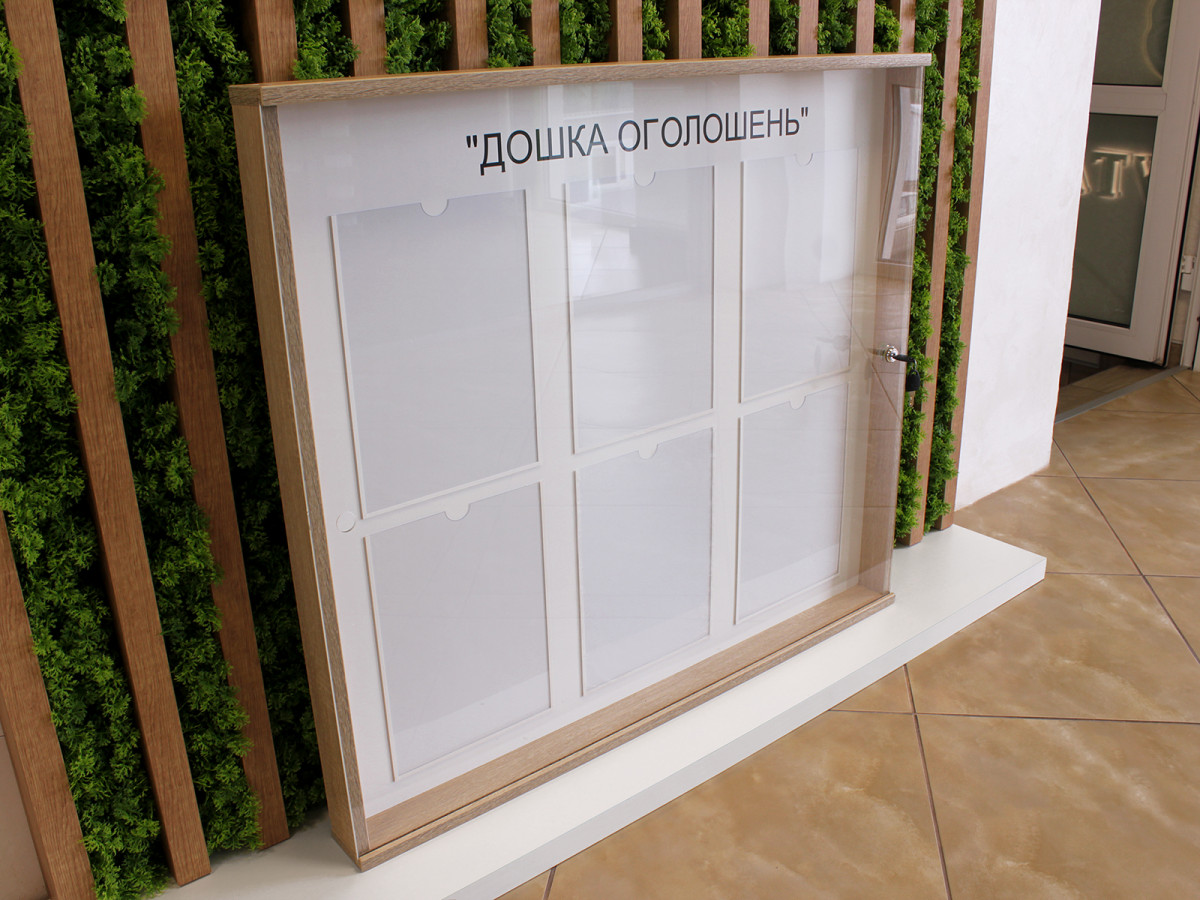

For care of acrylic doors and what not to clean them with, see the article caring for acrylic products. Lockable display cases are installed in lobbies, company checkpoints, entrance halls of schools and colleges and other places with heavy footfall – where only a responsible person should change the contents. If you do not need a lockable case for permanent content, flip display systems are a good fit for frequently updated notices at the entrance – no lock, but quick sheet changes.
- A lock and key are included with all models.
- Sizes from 420x600 to 1000x1500 mm.
- Production time 3-7 days.



-
![About us]() About us
About us
-
![Contacts]() Contacts
Contacts
-
![Payment]() Payment
Payment
-
![DELIVERY]() DELIVERY
DELIVERY
-
![Gallery]() Gallery
Gallery
-
![For designers]() For designers
For designers
-
![Print-ready artwork requirements]() Print-ready artwork requirements
Print-ready artwork requirements
-
![Aluminium composite colour range]() Aluminium composite colour range
Aluminium composite colour range
-
![Chipboard colour palette in stock]() Chipboard colour palette in stock
Chipboard colour palette in stock
-
![Artwork approval rules]() Artwork approval rules
Artwork approval rules
-
![LED neon colours]() LED neon colours
LED neon colours
-
![Artwork design]() Artwork design
Artwork design
-
![RAL colour chart]() RAL colour chart
RAL colour chart
-
![Pantone colour chart]() Pantone colour chart
Pantone colour chart
-
![Series 641 – economy]() Series 641 – economy
Series 641 – economy
-
![Altuglas coloured acrylic palette]() Altuglas coloured acrylic palette
Altuglas coloured acrylic palette
-
![Two-layer plastic colour palette]() Two-layer plastic colour palette
Two-layer plastic colour palette
-
![Useful articles about advertising]() Useful articles about advertising
Useful articles about advertising
-
 About us
  Company documents
  Contacts
  Payment
  DELIVERY
  Gallery
  For designers
  Print-ready artwork requirements
  Aluminium composite colour range
  Chipboard colour palette in stock
  Artwork approval rules
  LED neon colours
  Artwork design
  RAL colour chart
  Pantone colour chart
  Series 641 – economy
  Altuglas coloured acrylic palette
  Two-layer plastic colour palette
  Useful articles about advertising